
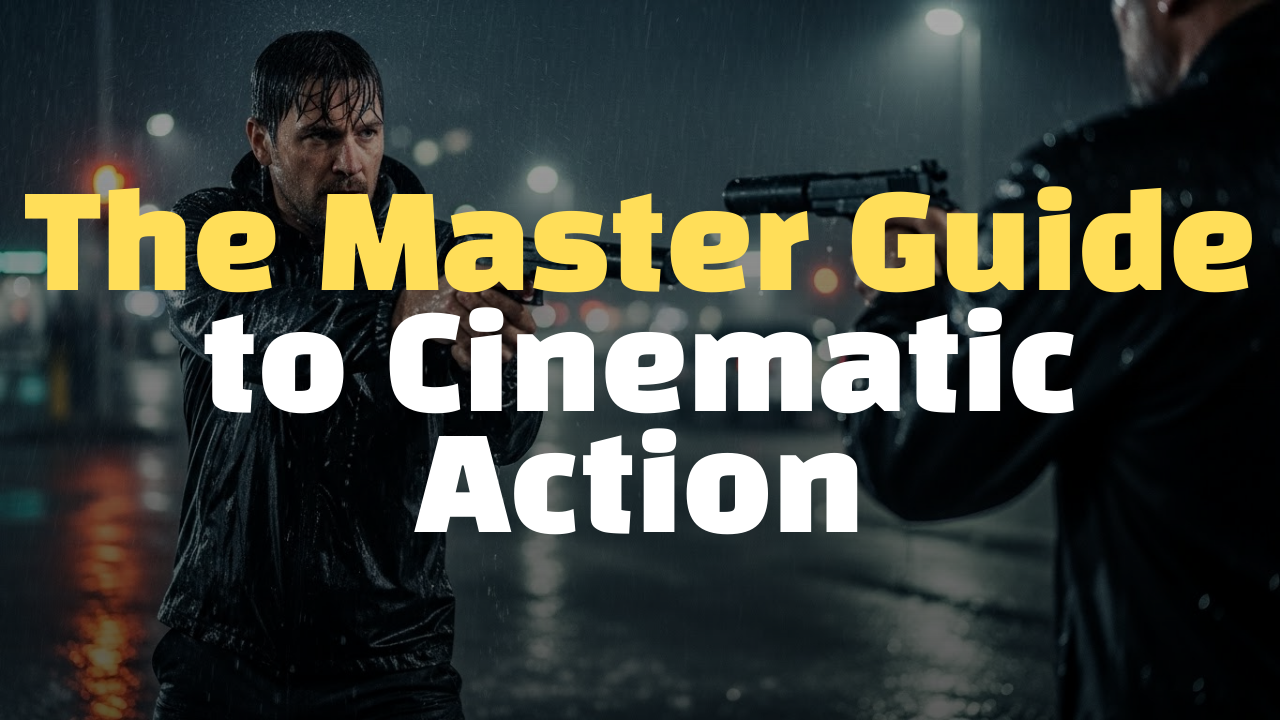
The Art of Action: Beyond the Movement
Action photography isn’t just about motion; it is about intent, stakes, and tension. A truly cinematic action portrait captures the split second before a move or the heavy atmosphere of a standoff. By leveraging advanced visual configurations and specific character dynamics, you can create images that feel like a high-budget film still.
This guide explores over 50+ action-oriented dynamics, categorized by their emotional and physical intensity, to help you master the art of high-stakes storytelling.
1. The Tactical Standoff (Psychological Friction)
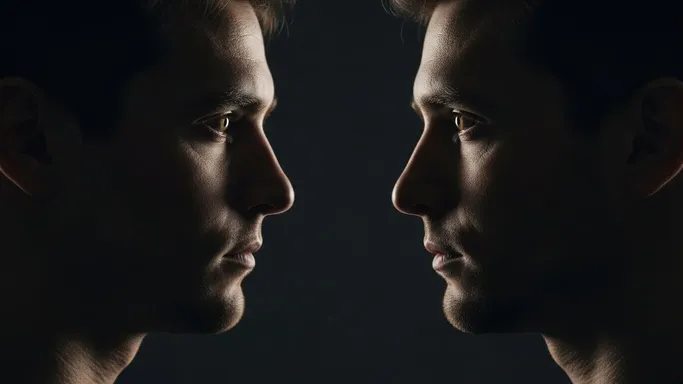
The most powerful action scenes often involve two characters in a deadlock. This stage focuses on the mental battle before the physical one.
- Key Dynamics: Intense Standoff, Gaze Match, Mirroring, The Confrontation, Symmetrical Face-off, The Quiet Challenge.
- The Focus: “The Locked Gaze.” The tension is built through unwavering eye contact and rigid posture.
- Technical Configuration:
- Visual Style: Deep shadows, moody contrast, and sharp focus.
- QC Standard:
gaze matches focusis mandatory to sell the intensity of the confrontation.
- Pro Tip: Position the camera at eye level to make the viewer feel like they are standing in the middle of the friction.
2. Pursuit & Spatial Pressure (The Chase Vibe)
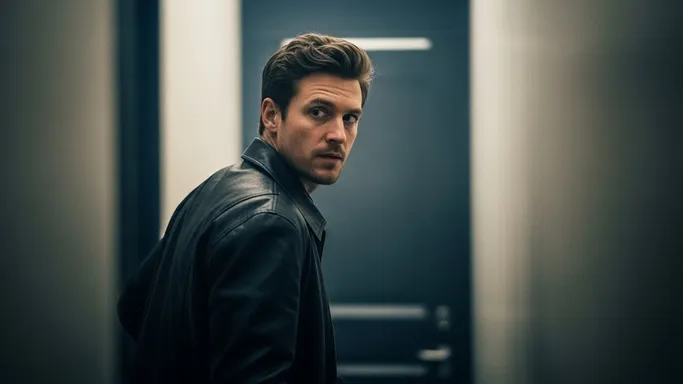
Using the environment to create a sense of urgency. These poses imply that a character is being cornered or is navigating a dangerous space.
- Key Dynamics: Cornering, Doorway Block, Looking Over Shoulder, The Narrow Escape, Wall Lean (Tactical), Searching the Shadows.
- The Focus: “Spatial Awareness.” The character’s relationship with the environment (walls, doors, corners) creates the narrative.
- Technical Configuration:
- Visual Style: Anamorphic bokeh and atmospheric haze.
- Lighting: Dramatic rim light to separate the character from the dark background.
- Pro Tip: Use natural motion blur on the background elements to imply speed while keeping the subject’s face in sharp focus.
3. The Guardian & The Shield (Protective Dynamics)
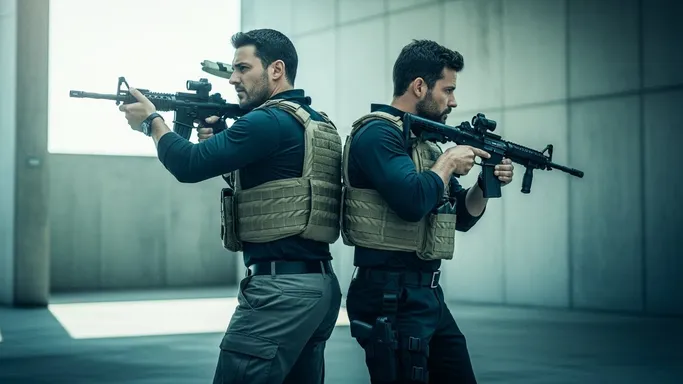
Action often involves a “Protector” and a “Protected” role. These poses emphasize trust, vigilance, and shared danger.
- Key Dynamics: Protective Shield, Back-to-Back, Guiding Hand, The Vanguard, Watchful Guardian, Shoulder-to-Shoulder, Covering the Exit.
- The Focus: “Mutual Reliance.” One character watches the front while the other guards the rear or finds a path.
- Technical Configuration:
- Visual Style: Cinematic color grading (cool teals or moody blues) and soft rim light separation.
- QC Standard:
pose matches story—the characters’ physical orientation must suggest they are a single unit.
- Pro Tip: Use color separation to distinguish the two silhouettes, ensuring they don’t blend into one dark shape.
4. Environmental Elements (High-Stakes Atmosphere)
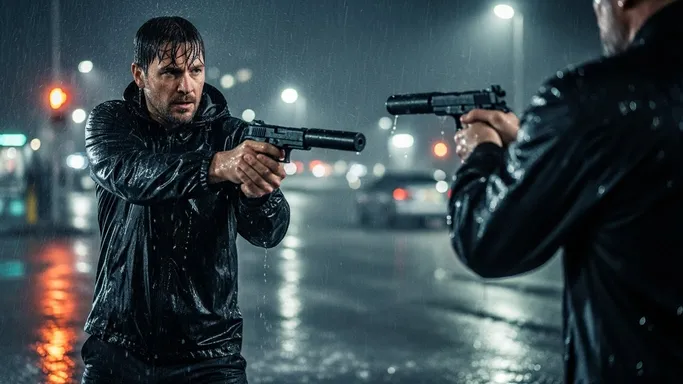
Action is intensified by the elements. Rain, mist, or smoke adds a layer of “High Production” quality to the scene.
- Key Dynamics: Rain-soaked Standoff, Misty Encounter, Wind-swept Lookout, The Smoke-filled Room, Shadowed Silhouette.
- The Focus: “Texture and Grit.” The interaction between the character and the weather makes the scene feel “True-to-Life.”
- Technical Configuration:
- Visual Style: Subtle film grain, controlled lens flares, and realistic skin specular highlights (to show moisture/sweat).
- Quality:
realistic cloth foldsandrealistic hair physicsare essential to show the effect of wind or rain.
- Pro Tip: Add slight atmospheric haze to increase the depth cues, making the scene feel three-dimensional.
5. Tactical Precision (The “Ready” Pose)
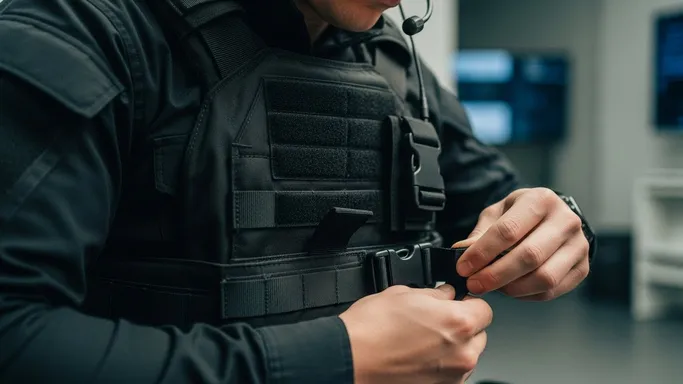
The moment of preparation. These are quiet but high-energy poses focusing on gear and readiness.
- Key Dynamics: Adjusting the Cuff, Tightening the Grip, Checking the Surroundings, The Low Stance, Hand on Gear, The Ready Breath.
- The Focus: “One Small Action.” A minor movement that anchors the realism of a professional in their element.
- Technical Configuration:
- Visual Style: High-end 3D render quality, clean edge detail, and shallow depth of field.
- Realism:
believable materials—ensure that leather, metal, and fabric look authentic under the light.
Technical Mastery: The Action Quality Checklist
To ensure your action portraits meet a professional standard, cross-check these four technical pillars:
| Category | Requirement | Why it Matters |
|---|---|---|
| Gaze | Gaze matches focus | If the character is in a standoff, their eyes must be perfectly aligned with the target. |
| Physics | Natural motion blur | Adds a sense of “Filmic motion cadence” even in a still frame. |
| Lighting | Dramatic rim light | Essential for defining silhouettes in dark or high-contrast action scenes. |
| Anatomy | Realistic facial anatomy | Action requires intense expressions; the facial muscles must look anatomically correct under tension. |
Conclusion: Directing the Energy
Cinematic action isn’t about the fight—it’s about the stakes. By selecting a Dynamic Pose and layering it with Optical Effects like anamorphic bokeh and dramatic rim lighting, you create a narrative that feels alive.