
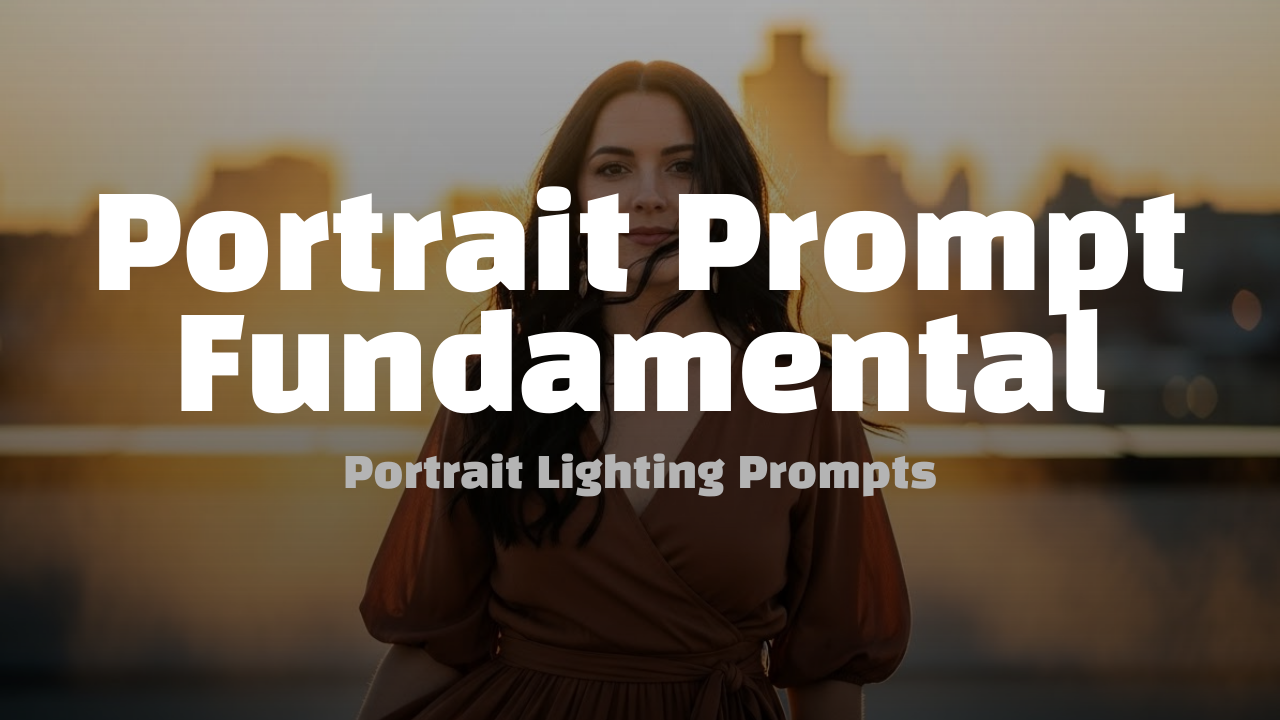
Why lighting and space matter more than “style words”
When portraits look flat, generic, or “AI-clean,” the root cause is often missing scene logic: light direction isn’t defined, time of day is ambiguous, and the environment has no spatial cues. This chapter gives you a practical language for portrait lighting patterns, time-based natural light presets, and indoor/outdoor scene staging so your portrait feels like a captured moment—not an isolated face.
The master formula (copy/paste)
[subject identity],[shot size + lens + camera height],[lighting pattern + key light direction + intensity],[fill/bounce + shadow softness],[time of day + weather],[environment type + location cues],[color temperature + color grade],[atmosphere details (optional)]Safe defaults (reliable realism)
Use these defaults when you want natural and believable lighting:
- Key light: “soft directional light, 30–45 degrees to the subject”
- Shadows: “soft shadows, realistic falloff”
- Fill: “subtle fill, gentle contrast”
- Color: “natural white balance” (then push warm/cool intentionally)
- Avoid: “flat front lighting,” “perfect beauty lighting everywhere,” “overexposed skin,” “glossy HDR”
1. Classic Portrait Lighting Patterns (Beauty / Rembrandt / Butterfly / Split)
Lighting patterns become predictable when you name:
- key light direction
- shadow shape
- contrast level
A) Beauty lighting (soft, flattering, minimal texture)
Use for: clean portraits, soft glam, commercial headshots.
Recipe
beauty lighting, soft frontal key light slightly above eye level, subtle fill, minimal harsh shadows, smooth light falloffWatch-outs
- Too much beauty lighting can erase texture; add skin micro-texture if you want realism.
B) Rembrandt lighting (triangular cheek light, cinematic)
Use for: classic portrait depth, cinematic realism, moody editorial.
Recipe
Rembrandt lighting, key light 45 degrees to the side and slightly above, soft triangular highlight on the far cheek, moderate contrast, gentle fillC) Butterfly lighting (shadow under nose, classic glam)
Use for: glam beauty, clean studio looks, symmetrical portraits.
Recipe
butterfly lighting, key light centered and above, small shadow under the nose, even cheek highlights, subtle fill, controlled contrastD) Split lighting (half face in shadow, dramatic)
Use for: noir, thriller, strong character portraits.
Recipe
split lighting, key light from the side, one half of the face in shadow, high contrast, minimal fill, dramatic falloffTroubleshooting (lighting patterns)
- If the face looks flat → add “directional key light” + specify angle (30–45 degrees).
- If shadows look too harsh → add “soft diffusion, gentle fill, soft-edged shadows.”
- If it looks too ‘beauty campaign’ → reduce beauty lighting, increase directional contrast slightly, add micro-texture.
2. Backlight, Rim Light, and Hair Light
Backlight creates separation and atmosphere. Specify rim placement and control haze.
Backlight recipes (copy/paste)
A) Clean rim light (sharp separation, low haze)
backlit portrait, rim light outlining hair and shoulders, controlled haze, subject exposure balanced, subtle fill on faceB) Soft hair light (romantic, gentle glow)
backlight with soft hair light, warm glow along hair edges, gentle diffusion, face softly filled, natural contrastC) Strong silhouette (graphic look)
strong backlight, partial silhouette, minimal facial fill, high contrast outline, cinematic moodTroubleshooting (backlight)
- If the background becomes washed out → add “controlled haze, balanced exposure, preserve highlights.”
- If the subject becomes too dark → add “subtle fill on face, gentle bounce light.”
- If rim looks fake → specify “natural rim from sun/window,” reduce glow language.
3. Outdoor Natural Light Presets (Golden Hour / Overcast / Noon Sun)
Time of day is a lighting tool. Choose one and commit to its characteristics.
A) Golden hour (warm, long shadows)
Recipe
golden hour portrait, warm low-angle sunlight, long soft shadows, gentle highlights, natural skin tones, cinematic warmthCommon fixes
- If it turns too orange → add “subtle warmth, natural skin tones, balanced white balance.”
B) Overcast (softbox sky, even tones)
Recipe
overcast daylight portrait, soft diffused sky light, low contrast, soft shadows, even skin tones, natural colorCommon fixes
- If it looks too flat → add “slight directional light, gentle contrast,” or specify “open shade with bounce.”
C) Noon sun (hard light, strong shape)
Use intentionally for: street style, high contrast, documentary.
Recipe
noon sun portrait, hard directional sunlight, crisp shadows, strong contrast, realistic highlights, documentary feelCommon fixes
- If it’s too harsh → add “open shade, bounce fill,” or “subject under awning.”
4. Indoor Lifestyle Scenes (Cafe / Study / Kitchen / Bedroom)
Indoor portraits feel real when you specify:
- primary light source (window/lamp/neon)
- practical props (cup, book, dishes)
- spatial cues (table edge, doorway, shelves)
A) Cafe (window light + ambient)
indoor cafe portrait, window light from the side, soft directional shadows, warm ambient background, subtle reflections, candid lifestyle moodB) Study / library (desk lamp + warm pools of light)
study room portrait, warm desk lamp key light, gentle falloff, soft shadows, bookshelves in background, cozy cinematic moodC) Kitchen (bright practicals + natural spill)
kitchen portrait, soft window light plus warm practical lights, natural highlights on surfaces, casual lifestyle scene, realistic shadowsD) Bedroom (soft morning light)
bedroom portrait, soft morning window light, gentle diffusion, low contrast, intimate atmosphere, natural color gradeIndoor troubleshooting
- If it looks like a studio cutout → add “environment interaction” (leaning on counter, holding cup) and “background depth cues.”
- If lighting looks inconsistent → name one key source (window/lamp) and reduce conflicting light descriptors.
5. Location Staging (Subway / Alley / Rooftop / Museum / Hotel Lobby)
Locations work when you describe:
- surfaces + reflections
- depth and scale cues
- light sources that logically exist there
Subway (fluorescent + reflections)
subway station portrait, cool fluorescent overhead lighting, subtle reflections on tiled surfaces, depth perspective lines, candid street moodAlley (neon + contrast)
night alley portrait, neon signage spill light, high contrast pockets of light, wet pavement reflections, cinematic street sceneRooftop (wind + skyline + golden hour)
rooftop portrait, golden hour backlight, gentle wind in hair and clothing, skyline bokeh, cinematic atmosphereMuseum (soft skylight + neutral tones)
museum portrait, soft skylight illumination, clean neutral walls, quiet ambience, gentle shadows, editorial calmHotel lobby (warm practicals + polished surfaces)
hotel lobby portrait, warm practical lighting, soft reflections on marble and glass, elegant ambience, controlled contrast6. Seasonal Scene Packs (Spring / Summer / Autumn / Winter)
Seasons are easiest when you specify: palette, air quality, and light behavior.
Spring (fresh, airy)
spring portrait, soft daylight, fresh pastel palette, gentle breeze, natural greens, light atmospheric claritySummer (bright, high energy)
summer portrait, bright daylight, crisp highlights, vibrant colors, warm atmosphere, natural skin tonesAutumn (warm, textured)
autumn portrait, warm directional light, rich earthy tones, soft haze, textured background, cinematic warmthWinter (cool, clean contrast)
winter portrait, cool daylight, clean contrast, soft breath haze (subtle), muted palette, crisp atmosphereSeasonal troubleshooting
- If the season feels generic → add 2–3 physical cues (wet leaves, visible breath, harsh sun, pollen haze).
- If skin tone shifts too warm/cool → explicitly request “natural skin tones” and set white balance intent.
Starter prompts (complete, ready-to-run)
1) Rembrandt indoor portrait (cinematic but realistic)
portrait of a man in his 30s,half-body portrait, eye-level camera, 50mm lens,Rembrandt lighting, key light 45 degrees to the side and slightly above, soft triangular highlight on far cheek, gentle fill,indoor study room, warm desk lamp ambience, bookshelves in background, depth of field bokeh,natural skin tones, soft micro-contrast, cinematic but realistic color grade2) Golden hour rooftop backlight (rim + atmosphere)
portrait of a woman in her late 20s,full-body portrait, eye-level camera, 35mm lens,golden hour backlight, rim light outlining hair and shoulders, controlled haze, subtle fill on face,rooftop setting, skyline bokeh, gentle wind in hair and clothing, natural motion,balanced white balance with subtle warmth, cinematic color grade3) Overcast street portrait (soft and natural)
portrait of a woman in her 20s,half-body portrait, eye-level camera, 50mm lens,overcast daylight, soft diffused sky light, low contrast, soft shadows, gentle depth,urban street background, natural reflections, candid mood, realistic color,natural skin tones, clean but realistic grade4) Noir alley split lighting (dramatic scene logic)
portrait of a man in his 30s,close-up portrait, eye-level camera, 85mm lens,split lighting, high contrast, minimal fill, neon spill as motivated light source,night alley location, wet pavement reflections, atmospheric haze controlled,cool color temperature with selective warm highlights, cinematic noir gradeMini checklist (publish-quality scene portraits)
- Lighting pattern is explicit (beauty/rembrandt/butterfly/split or backlight/rim).
- Key light direction is stated (side, above, behind) with a rough angle.
- Time of day and weather are defined (golden hour/overcast/noon).
- Indoor scenes name a motivated light source (window/lamp/neon).
- Locations include 2–3 physical cues (reflections, surfaces, depth lines, skylight).
- Color temperature is intentional; request natural skin tones if needed.
- Avoid contradictory lighting instructions (e.g., “hard noon sun” + “soft diffused shadows” in the same prompt).